Anúncios
Find out where to follow new auctions, how much it costs to win a unit, and how to bid more strategically.
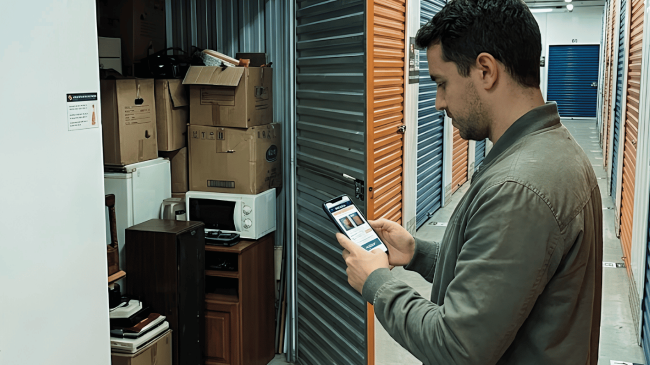
If you already follow Storage Auctions, you know the thrill of opening a unit you’ve won is hard to explain. Every storage unit holds a different story, and that surprise is what draws so many buyers.
What has changed in recent years is how people take part. Today, most bidding happens online, with photos, longer deadlines, and options in several cities at once.
And if you’re just getting started, that’s fine. Before getting into strategy, we’ll quickly explain how everything works so you can follow along with confidence.
In this guide, you’ll find out where to find trustworthy auctions, how much it costs to win a unit, and how to take part step by step. Let’s get started?
Storage Auctions in a nutshell for beginners
Storage Auctions are auctions of the contents of self-storage units. In most cases, they happen when the tenant stops paying rent for an extended period.
Before the sale, the company must follow the lien sale process required by state law. This includes sending notices, meeting deadlines, and advertising the auction publicly.
If payment isn’t made, the unit’s contents are sold as a whole to the highest bidder. You don’t pick individual items, and everything is sold as is.
For companies, an auction is always the last resort. For buyers, it’s a different way to find furniture, tools, electronics, and all kinds of items at prices set by the bidding.
Why more and more buyers have moved to online auctions
For a long time, Storage Auctions took place only on site, with the auctioneer and buyers gathered in front of the units. Today, online platforms have changed that routine.
The main advantage is convenience. Instead of driving to each location, you can follow several auctions on your phone, compare options, and take your time deciding where it’s worth bidding.
On the other hand, online bidding tends to draw more participants, which can push final prices higher. That’s why knowing the differences between formats helps you choose the one that suits you.
See the comparison below:
| Criterion | In-person auction | Online auction |
| Duration | Quick, decided on the spot | Usually lasts a few days |
| Unit review | Quick look from the door | Photos and description in the listing |
| Payment | According to the facility’s rules | Fees charged to the card on file |
| Competition | Limited to those on site | Can be higher |
Where to find trustworthy Storage Auctions
Knowing where to look makes all the difference if you want to catch good opportunities. The more organized your search, the less time you waste on unclear listings.
Below are the main channels used by frequent bidders.
Specialized platforms
Specialized platforms bring together auctions from several self-storage companies in one place. Among the best known is StorageTreasures, operated by OpenTech Alliance.
There, you’ll find both online auctions and notices of in-person auctions. The search lets you filter by:
- ZIP code
- state
- city
- company name
- item category.
Each listing includes photos, unit size, closing date, and the rules of the company in charge. That way, you can review everything before deciding.
A practical tip is to log in before searching. Without logging in, closing times are shown in Arizona time, which can be confusing if you’re in another region.
Self-storage company websites and notices
Many self-storage chains post their auctions on their own websites or say which platform they use. It’s worth getting to know the companies that operate in your area.
Also, since the law requires sales to be advertised, some notices also appear in local newspapers and classifieds websites.
Calling the company before an in-person auction is also good practice. Sales are often canceled because the tenant paid off the debt at the last minute.
This way, you avoid unnecessary trips and confirm the rules for that specific unit.
Alerts and watch lists so you never miss new auctions
Regular bidders know that new units show up all the time. That’s why turning on app notifications helps you keep up with new listings without searching every day.
The watch list is another very useful tool. With it, you save the units that caught your eye and track how the bidding develops.
This tracking also shows how much similar units usually go for in your area. Over time, that benchmark makes your decisions more confident.
That way, your search stays more organized, and you only join the auctions that truly fit your goals.
Types of auctions you’ll come across
Not every listed unit has the same origin. So before placing any bid, check the auction type shown at the top of the listing.
When there’s no special label, it’s a unit tied to unpaid rent, which is the most common format.
See the differences:
| Type | Who lists it | Origin of the items |
| Lien Unit | Self-storage companies | Delinquent tenant, sold in accordance with state law |
| Non-Lien / Manager’s Special | Companies and private sellers | Items left behind, given up by the tenant, or no longer wanted by the owner |
| Charity Storage | Companies participating in the program | Donated items, with proceeds going to social causes |
In charity auctions, most of the money goes to the organization chosen by the company. The rest supports cancer research, industry scholarships, and administrative costs.
How to evaluate a unit before bidding
In Storage Auctions, you can’t open boxes or handle items before buying. That’s why visual inspection is your main tool for evaluating each unit.
Start by looking at the size of the unit and the amount of visible items. Larger spaces require more work to clear out, and that needs to factor into your math.
Also notice how everything is stored. Labeled boxes, covered furniture, and neatly arranged items usually suggest the previous tenant took care of their belongings.
Also read the company’s additional information, such as the removal deadline and payment methods. Remember that what’s inside closed boxes is always a surprise.
How much you really pay when you win an auction
A common beginner mistake is counting only the bid amount. In practice, other costs come up after the win and can strain your budget.
On StorageTreasures, the card on file is charged the buyer’s premium, which ranges from 9% to 18% depending on the account type. A purchase deposit of up to 10% is also charged and deducted from the bid.
At pickup, you pay the remaining bid balance, sales tax where applicable, and the cleaning deposit in cash. You can show a resale certificate to the manager, but not every company grants an exemption.
Here’s an illustrative example:
| Item | $300 bid (12% fee) | Where it’s paid |
| Buyer’s premium | $36 | Card, on the platform |
| Purchase deposit (10%) | $30 | Card, deducted from the bid |
| Bid balance | $270 | At the facility |
| Sales tax | Varies by state | At the facility, where applicable |
| Cleaning deposit | Set by the company | In cash, refundable |
On top of that, add truck rental, helpers, and disposal of anything you won’t use. These costs are also part of the unit’s real price.
Bidding strategies for buying with more control
Having a bidding strategy doesn’t guarantee good results, but it does help you decide more deliberately. After all, the heat of the moment can lead you to spend more than planned.
The first rule is to set a ceiling for each unit, adding up all fees and removal costs. Then use the max bid, which counters competing offers in $10 increments up to your limit.
Be careful, because a confirmed bid can’t be withdrawn. The most you can do is lower your max bid down to the current highest offer.
Knowing when to walk away is also part of the strategy. And if you lose by a small margin, you may still receive a Second Chance Offer if the winner backs out of the pickup.
Step by step to bid on StorageTreasures
Now that you know where to look and how much you’ll pay, it’s time to put it all into practice. To access the official platform, click the button below and follow the steps.
Website
Storage Treasures
- Create your account. Click Sign Up, choose the buyer option, and fill in your contact details, email, and password.
- Activate your account. Confirm it through the link sent to your email.
- Add a credit card. It’s required to bid, since it covers the platform fees.
- Filter auctions by city or ZIP code. Choose locations you can easily get to.
- Add units to your watch list. Follow the bidding before deciding to jump in.
- Place your bid. Review the terms, enter the amount or set a max bid, and confirm in both steps.
- Follow the auction. Turn on notifications so you know when someone outbids you.
If the auction is canceled, for example because the tenant paid off the debt, the refund is issued within 48 hours.
Frequent bidders may want to consider the Pro plan. It lowers the buyer’s premium and lets you register an authorized person to handle pickup.
Rules and deadlines after you win
Once you’ve won the auction, print the invoice sent by email and contact the company to schedule pickup. The deadline to clear out the unit is usually short, generally between 24 and 48 hours.
On the agreed day, bring the exact amount in the accepted payment method, plus the cleaning deposit. Documents, family photos, and personal records must be left with the company, which handles returning them to the former tenant.
Following the rules also protects your account. These are the main reasons for suspension:
- Declined card, since fees must be paid within 24 hours;
- Taking only what you want and leaving the rest in the unit;
- Not clearing out the unit by the deadline;
- Creating multiple accounts or artificially inflating bids.
So only bid if you’re sure you can handle the entire pickup. That way, you’ll get your deposit back and keep your account in good standing.
Conclusion
Storage Auctions continue to attract people who love surprises and finding all kinds of items at prices set by the bidding itself.
With platforms like StorageTreasures, it’s become easier to follow auctions in different cities and evaluate each unit at your own pace.
Still, planning is essential. Setting a ceiling, calculating every fee, and meeting deadlines makes all the difference.
Enjoyed the guide? If you want to organize your budget better before jumping into auctions, check out the article below and learn about Creditea’s personal loan!
Recommended Content